
Customer lifecycle management made simple: A practical guide for 2026
 Sneha ArunachalamNOVEMBER 24, 2025
By Sneha Arunachalam
Updated on Mar 23, 2026
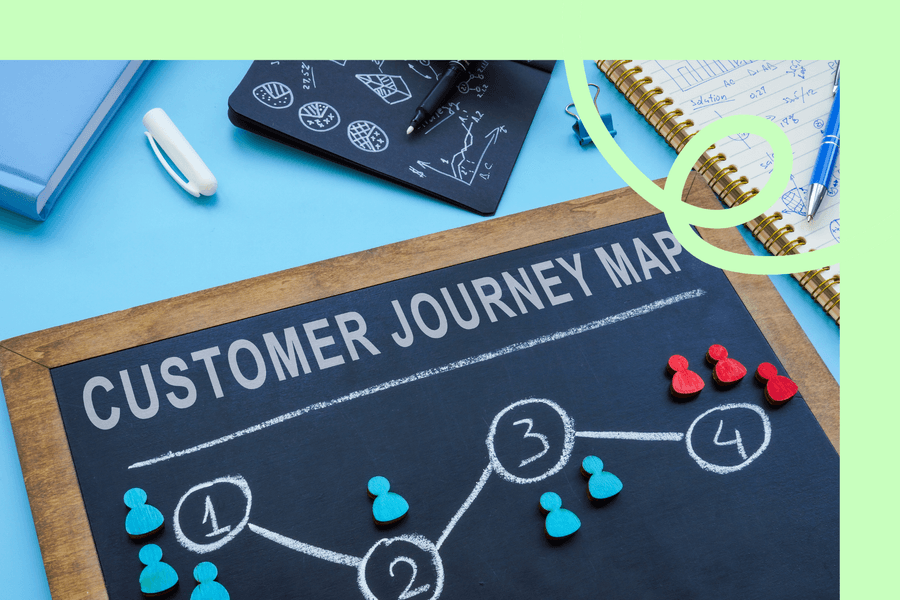
Most businesses are guessing at what their customers actually want. You're making decisions based on what you think happens, not what really happens.
A customer journey map changes that. Think of it like switching from driving blindfolded to having GPS suddenly you can see every turn, every roadblock, and every shortcut your customers take when dealing with your brand.
You spot the pain points that make people give up and the moments that keep them coming back.
The stats back this up. Focusing on customer journeys is 35 percent more predictive of customer satisfaction than looking at individual touchpoints alone. That's because customers don't experience your business in isolated pieces they experience it as one connected story.
This guide walks you through what a customer journey map actually is, how to build one step-by-step, and real examples you can steal ideas from for your own business.
A customer journey map shows every experience a customer has with your brand from the moment they first hear about you to months after they buy something.
It captures the complete path people take, including where they interact with you, how they feel, and where they hit roadblocks.
Think of it like this: instead of watching your business from the inside looking out, you flip the script. You see your brand exactly how customers do, not how your internal processes work.
This outside-in view shows you where things click and where people get stuck in ways you'd never notice otherwise.

Your map needs these core pieces to actually work:
Both track how customers progress, but they work totally differently.
Marketing funnels follow a straight line. They focus on pushing prospects toward buying through controlled efforts like ads and emails.
Customer journey maps?
They're messy and customer-driven, showing how people actually experience your brand across multiple touchpoints.
Funnels assume people follow predictable steps. Journey maps accept that customers loop back, revisit earlier stages, and take weird detours. The average customer hits eight touchpoints before buying.
Here's how this plays out: A bank's funnel might focus on getting loan applications. But their journey map reveals that unclear instructions in the online application kill conversions.
The funnel shows you the strategy the journey map shows you why it's not working.
Customer journeys aren't just pretty diagrams anymore. They're turning into management operating systems. Smart companies now use platforms that connect customer feedback, analytics, business intelligence, and delivery tools.
Customer journey management isn't just about creating maps, it's about making insights actionable across your organization. Platforms like SparrowDesk take the guesswork out by connecting customer feedback, analytics, and support workflows in one place.
 TRY SPARROWDESK FREE FOR 14 DAYS
Map customer journeys with SparrowDesk
Instead of insights getting stuck in PowerPoints, SparrowDesk ensures your team can act immediately on real customer data.
The numbers prove it works.
Companies that actively map customer journeys see 54% higher returns on marketing investment and sales cycles that are 18% faster. When 55% of consumers will pay more for consistently good experiences, getting this right hits your bottom line directly.
Executives care when journeys help teams decide what to build, fix, or stop not just where customers feel frustrated.
Customer journey management isn't about creating better maps anymore. It's about making customer insights accessible and actionable across your entire organization.

Here's the thing, building a customer journey map isn't about drawing pretty diagrams. It's about uncovering what's actually happening between your customers and your business. These seven steps will get you there without the guesswork.
Start with why you're doing this.
Without clear goals, your map becomes a nice-to-have wall decoration instead of something that drives real change.
A B2B workflow automation company focused specifically on improving lead-to-conversion rates by identifying bottlenecks in their sales cycle. That focus made their map actionable.
Skip the made-up personas based on what you think customers want. Use real data from your CRM, customer feedback forms, and interviews with your sales team.
You need demographics, sure, but dig deeper — what problems keep your customers up at night? What makes them choose you over competitors?
One persona per map works best. Try to capture multiple customer types in one map, and you'll end up with a confusing mess that doesn't help anyone.
Think like a customer, not like your internal org chart. Common stages include awareness, research, consideration, decision, and post-purchase phases. But let your actual customer data show you where their mindset shifts and goals change.
Your customers don't care about your department handoffs, they care about solving their problems.
List every single interaction customers have with your brand. Website visits, emails, social media, phone calls, support chats, even those indirect touchpoints like peer reviews and word-of-mouth referrals.
A mid-market IT company mapped everything from email campaigns and webinar attendance to demo requests, follow-up calls, and post-demo documentation. Those indirect touchpoints often matter more than the ones you control.
Now comes the detective work. Conduct 5-8 customer interviews and ask people to walk you through their recent experiences. These conversations reveal the emotions and motivations hiding behind the clicks and conversions.
Don't stop there. Pull support tickets, website analytics showing drop-off points, NPS scores by touchpoint, and CRM records. Cross-check findings across at least three sources to spot the real patterns.
Map the emotional roller coaster your customers experience. Where do they feel confident and excited? Where does frustration creep in?
A B2B company discovered massive drop-off rates after follow-up emails because IT directors couldn't find ROI examples. Look for both the obvious complaints customers voice and the subtle frustrations you can only spot through observation.
Pull everything together into a visual story that your entire team can understand. Include stages, touchpoints, actions, emotions, and pain points. Use simple flowcharts or infographics fancy design won't make bad insights any better.
The real work happens next. Analyze patterns to find your biggest improvement opportunities.
Here's what's interesting, journey maps look completely different depending on your industry. What works for a software company won't work for a bank, and what matters to an online retailer means nothing to a B2B service provider. Each sector has its own quirks, pain points, and customer expectations that shape how people experience brands.
B2B SaaS journey maps break the mold in three ways that matter.
Most prospects try your product before they ever talk to a human free trials and freemium tiers are standard now.
People expect to figure things out on their own first, so self-service carries more weight early on. And unlike other industries where customers bounce between channels, SaaS journeys center around your actual software.
The typical journey unfolds across six stages that feel predictable once you map them out.
HubSpot nailed their journey map by using color coding to highlight frustration versus delight moments. They added real customer quotes at each stage, which made the whole thing feel less academic and more urgent for their teams.
Here's the brutal truth about e-commerce — around 70% of items added to cart never get purchased. That's why smart retailers focus their journey maps on specific problems rather than trying to capture everything.
Most e-commerce maps trace the path from first visit to repeat purchase, but the devil lives in those checkout details. Amazon breaks their conversion process into bite-sized pieces, tracking metrics at each step to catch where people bail out.
They extend the journey past purchase too, order confirmations, shipping updates, and personalized recommendations keep the relationship going.
The stores that get this right focus on three things: navigation that actually makes sense, personalized experiences based on purchase history, and mobile experiences that don't suck.
One cosmetics brand includes application tutorial videos throughout their journey, which builds buyer confidence and cuts returns.
Banking journeys cover everything from account opening to dispute resolution. A typical savings account journey hits predictable stages awareness through ads or search, consideration while comparing options on bank websites, decision-making during branch visits or online applications, onboarding through forms and verification, and ongoing experience through apps and customer service.
Banks face headaches like confusing website navigation, missing information, and application processes that take forever.
Post Insurance found this out the hard way — 90% of quote requests started online, but only 35% actually completed the purchase form.
After mapping the journey and listening to customer calls, they discovered one confusing question was driving people to phone support. Fixing that one issue boosted conversions by 6%.
Citizens Bank used journey mapping to stop obsessing over internal metrics like call duration and start measuring what customers actually care about getting their problems solved on the first try.
Wells Fargo mapped payment management journeys and built an app that helps people control recurring subscriptions they forgot about.

Here's the thing — not every customer journey map serves the same purpose. Your choice comes down to whether you're trying to fix what's broken now or dream up something better for later.
Think of current state maps like taking a photo of what's happening right now. These maps capture the actual experience customers have when trying to get something done with your product or company as it exists today. They're built on real data, not wishful thinking.
You'll use them to get everyone on your team seeing the same customer reality.
A good current state map highlights where customers hit walls, get confused, or feel frustrated. Here's what that looks like: your map might show customers getting annoyed when login doesn't work, but it won't dig into why your servers are slow. That's not the point, you're mapping the customer's experience, not your internal problems.
Future state maps are where you get to imagine what could be. These maps show what customers will do, think, and feel when interacting with your improved business.
Unlike current state maps that stick to facts, these run on creativity and big ideas. They help you picture how you'd support new customers or launch new products.
Use future state maps when you need everyone aligned on where you're headed. This type of map takes the pain points you found in your current state map and shows how you'll fix them plus what new opportunities you want to chase.
Day in the life maps zoom out to see the bigger picture. They reveal what a person does, feels, and thinks during a typical day.
The difference? These maps look at their whole day, not just when they're dealing with you. You can spot the perfect moment to reach them or discover problems you never knew they had.
Service blueprints get into the weeds of how things actually work. They map the relationship between all the moving parts people, processes, and tools that create customer touchpoints.
They show what customers see upfront and all the behind-the-scenes work that makes it happen. Use blueprints when your customer experience spans multiple channels or requires different teams to work together.
Your customer journey map isn't a one-and-done project. Think of it like maintaining a car skip the regular tune ups and it breaks down when you need it most.
Customer behaviors shift, products evolve, and market conditions change. All of this impacts how people interact with your brand.
Seventy-five percent of companies that use customer journey maps refresh them regularly and plan to continue doing so. That's because smart businesses know maps go stale fast.
Review your map when sales decline, customers churn, you launch new products, or face increased competition. At minimum, set a quarterly review schedule. Here's what works: assign specific people or teams to own updates so maps don't become outdated artifacts gathering dust.
Bring together sales, marketing, customer service, product teams, and analytics when building and updating your map. Each department sees different pieces of the customer puzzle.
Sales knows what objections people raise. Support understands what makes customers call for help. Analytics reveals where people actually drop off versus where you think they do. Without cross-functional input, you create incomplete maps based on what one department thinks happens.
Journey maps show customer experiences, not your internal workflows. Skip research or rely on assumptions, and you'll map what you think happens rather than what actually occurs.
We've seen this mistake countless times — teams create beautiful maps that reflect their org chart instead of their customer reality.
Ground your map in direct customer feedback through interviews and behavioral data. Your customers will tell you things your internal teams never noticed.
Keep maps clear enough that people understand them without getting overwhelmed. Show sufficient detail to communicate ideas, but don't map every minor step in the process.
Clarity and focus produce actionable insights. A simple map that gets used beats a complex one that sits in a drawer.
Customer journey maps turn guesswork into action. You've got the roadmap now, don't try to map your entire business on day one. Pick one goal, one customer type, and start there.
Think of it like this: you wouldn't renovate your whole house without knowing which room needs the most work. Same goes for customer experience. Find the biggest pain point first, then expand from there.
Your first map won't be perfect. That's totally fine. What matters is getting real customer voices into the conversation instead of making decisions based on what you think happens. The gaps you discover will surprise you — and those surprises are where the money is.
Start small, stay curious, and keep updating as things change. Your customers are already telling you exactly what they need. Now you know how to listen.
Platforms like SparrowDesk centralize customer feedback, support interactions, and analytics, giving your team real-time visibility into the entire journey so you can fix pain points and delight customers faster.
TRY SPARROWDESK FREE FOR 14 DAYSImprove customer experiences with SparrowDesk
Ready to turn insights into action?
Master the art of understanding your customers through strategic journey mapping that drives real business results and competitive advantage.
• Follow the 7-step framework: Define goals, build personas, identify stages, map touchpoints, gather data, document emotions, and visualize opportunities for actionable insights.
• Ground maps in real data, not assumptions: Conduct 5-8 customer interviews and triangulate findings across multiple sources to create evidence-based maps that reflect actual experiences.
• Focus on customer perspective over internal processes: Map what customers actually experience, not your company workflows, to identify genuine pain points and improvement opportunities.
• Update maps regularly with cross-functional teams: Refresh quarterly and involve sales, marketing, support, and analytics teams to maintain accuracy and relevance as customer behaviors evolve.
• Start specific, then scale: Begin with one goal and one persona rather than mapping everything at once to ensure clarity and actionable outcomes.
Companies using this strategic approach achieve 54% higher marketing ROI and 18% faster sales cycles, proving that customer journey mapping is essential for business growth in 2026.
Sneha ArunachalamNOVEMBER 24, 2025
-300x318.jpg&w=3840&q=75) Vaishali JayaprakashAUGUST 25, 2025
Vaishali JayaprakashAUGUST 25, 2025 Sneha ArunachalamJULY 14, 2025
Set up SparrowDesk in minutes, not months. No credit card needed, no safe call required. Just a better way to run support from day one.