
Customer interaction management software: A proven guide for ecommerce success [2025]
 Sneha ArunachalamAUGUST 12, 2025
By Sneha Arunachalam
Updated on Feb 6, 2026
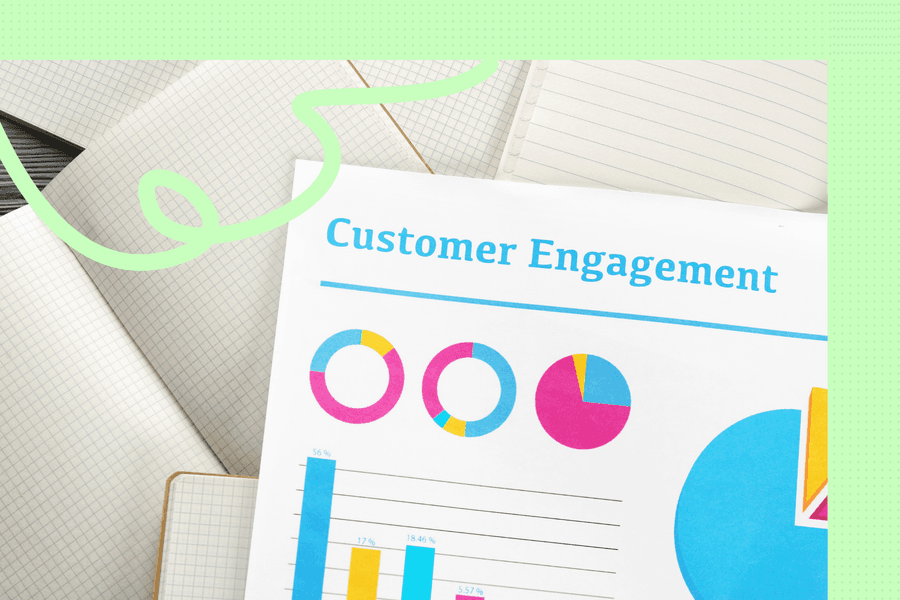
Customers don’t judge you by one interaction anymore. They judge you by how every conversation feels across channels, over time.
A customer engagement platform is what makes that experience feel connected instead of chaotic.
In this blog, we’ll cover how these platforms differ from CRMs, why they matter for growing businesses, what to look for when choosing one, and how to measure real impact.

A customer engagement platform pulls together every way you talk to customers, your website chat, emails, social media, phone calls, text messages into one smart system that actually remembers who people are and what they care about.
Think of it like this: instead of having five different tools that don't talk to each other, you get one platform that connects the dots.
When someone visits your website, chats with support, then emails you later, the platform knows it's all the same person.
These customer engagement platforms grab information from everywhere customers interact with you your website, mobile app, even your physical store if you have one, then use that data to make every conversation feel personal.
A lot of people mix up customer engagement platforms with CRMs, but they're solving totally different problems.
Your CRM is basically a digital filing cabinet. It stores customer info and tracks who's talking to whom, but that's about it. Each department usually has their own section, and getting everyone on the same page takes work.
Customer engagement platforms actually do something with all that information.
While your CRM tells you Sarah bought something last month, an engagement platform knows Sarah's been looking at winter coats, abandoned her cart twice, and prefers email over phone calls, then automatically sends her a personalized message about that coat she was eyeing.
CRMs mostly just report on what already happened. Engagement platforms use AI and real-time data to predict what should happen next, then make it happen.
As one expert puts it, "If a CRM knows who the customer is, and a CDP tells you what they've done, a CEP decides what to do next, and actually does it".
Your CRM organizes information while engagement platforms create experiences.
This is exactly why many growing teams are moving toward modern customer engagement platforms like SparrowDesk.
SparrowDesk brings conversations from email and live chat into a single shared workspace, so teams always have full customer context. AI handles repetitive questions, assists with routing, and helps agents respond faster keeping experiences consistent without increasing workload.
For growing businesses, this means personalized engagement, faster responses, and better team alignment without the overhead or complexity of enterprise systems.
 TRY SPARROWDESK FREE FOR 14 DAYS
Discover SparrowDesk for customer engagement
You're probably drowning in customer support tools that promise to fix your customer relationships. But here's what makes engagement platforms different: they actually deliver results you can measure.
Here's something that might sting a little:
71% of your customers want you to recognize them as individuals, and 76% get frustrated when you don't. Think about it
when you walk into your favorite coffee shop, the barista knows your order. Your business should feel the same way. Customer engagement platforms make this happen through AI that figures out the best content, timing, and channel for each person.
Companies using these smart recommendations see lower customer acquisition costs and recover more lost conversions.
Nobody likes waiting. Your customers expect responses fast, we're talking minutes, not hours. Customer engagement platforms handle this through:
One financial company saw their service interactions drop 40-50% and cut costs by over 20% after implementing AI-enabled support.
Even better?
Their customers started using self-service channels 2-3 times more often, making everyone happier.
Getting new customers costs 5-25 times more than keeping the ones you have. That math should get your attention.
Companies with solid engagement programs keep 77% of their customers, while businesses without them only retain 43%. Here's the crazy part — boost your retention by just 5% and your profits can jump 25-95%.
But it goes beyond just keeping customers. Engaged customers spend more, refer friends, and need less hand-holding.
When you integrate loyalty programs with engagement platforms, customers stick around longer and discover new ways to use your products.
Picture this: your marketing team finally sees the same customer data as your support team.
No more "Can you repeat that?" moments when customers switch from chat to email.
This unified approach eliminates those frustrating data silos that make customers feel like strangers every time they contact you.
When Uber implemented centralized engagement tools, they saved agents over 4,000 hours, cut first response time by 33%, and handled 8% more cases on time.
Your customers feel recognized no matter which channel they use or which team member helps them. That's the kind of seamless experience that builds real loyalty.
“When our support team can see the full customer context in one place, conversations move faster and feel more human. Customers don’t have to repeat themselves, and our agents can focus on solving problems instead of searching for information”
Most software demos look impressive until you actually need to use the thing. Here's what really matters when you're evaluating customer engagement platforms.
You need customer engagement software that handles everything your customers use to reach you.
We’re talking website chat, mobile apps, email, SMS, WhatsApp, Facebook Messenger, and Apple Messages for Business. Meeting customers where they already are makes all the difference.
Here's the key part though: the best customer engagement platforms don't just support multiple channels, they remember the conversation when customers switch between them.
So when someone starts chatting on your website and later sends an email, your team sees the complete history. No more "can you repeat that?" moments.
AI isn't just buzzword stuff anymore, it's become essential. Look for customer engagement platforms that can:
The really good systems figure out what customers need and get them to the right person with all the context intact. Your customers get faster help, and your team stops wasting time on handoffs.
This is where platforms like SparrowDesk really shine.
SparrowDesk uses intelligent automation to handle routine questions, suggest context-aware replies, and route complex issues to the right person all without losing conversation history.
By combining a shared inbox with AI-assisted resolution, SparrowDesk helps teams stay responsive and efficient, so agents can focus on high-impact conversations instead of repetitive tasks.
TRY SPARROWDESK FREE FOR 14 DAYSReduce manual work with SparrowDesk
Real-time reporting gives you heads up when something's going wrong or really right. You want customer engagement platforms that show you:
These insights help you spot problems early and figure out what's working through testing and customer feedback.
Here's something that'll bite you later if you ignore it. Most businesses have only connected 28% of their applications. That creates data headaches you don't want.
Make sure whatever customer engagement platform you choose connects with your CRM, whether that's Zoho, HubSpot, Salesforce, or something else.
When all your tools share the same customer data, you can actually deliver those personalized experiences everyone talks about.
About 61% of customers prefer handling routine stuff themselves. A solid customer engagement platform should include:
The smart platforms even flag when your help content needs updating or when there are gaps customers keep hitting. Keeps everything fresh without you having to babysit it.
This is where SparrowDesk fits in naturally.
SparrowDesk combines a built-in knowledge base, AI-powered responses, and smart chat automation to help customers find answers on their own without hitting a dead end.
When self-service isn’t enough, conversations seamlessly move to human agents with full context, ensuring issues get resolved quickly and without repetition.
TRY SPARROWDESK FREE FOR 14 DAYSEnable smarter self-service with SparrowDesk
Here's the reality: Most customer engagement platform demos look amazing until you actually try to use them with your real data and workflows.
Vendors love showing polished presentations, but the right platform comes down to how well it solves your specific problems.
Start with the basics: what are you actually trying to fix?
Maybe you're losing customers after their first purchase, or your support team can't see what marketing promised a customer last week.
Get specific about whether you need better retention, higher loyalty, or more referrals.
Pick the customer service metrics that matter most to your business — customer lifetime value, retention rates, conversion improvements.
This keeps you focused on platforms that move the needle on real business outcomes instead of getting distracted by flashy features you'll never use.
Once you know what success looks like, figure out which features will get you there. Your marketing team might need drag-and-drop journey builders, while your support team cares more about seeing complete customer history.
Try ranking features by impact:
Focus on user-friendliness, multichannel support, personalization capabilities, and integration compatibility as your non-negotiables.
Think of your tech stack like your home's electrical system, everything needs to connect properly or nothing works right.
A great customer engagement platform that doesn't talk to your CRM or data warehouse just creates another silo.
Most companies juggle around 900 different applications with only 29% actually connected. That's a recipe for data gaps and frustrated teams. Check for pre-built connectors to your essential systems before you sign anything.
Skip the scripted demo and ask for a hands-on trial with your actual data. Have your marketing team try building a real campaign, not the vendor's perfect example.
Watch how your people navigate the interface without a sales rep holding their hand.
Pay attention to whether creating campaigns feels intuitive or requires a computer science degree. Even the most powerful platform becomes useless if your team won't actually use it.
The sticker price never tells the whole story. Factor in implementation costs, training time, ongoing maintenance, and those sneaky integration fees that appear later. Hidden costs often add 25-35% on top of the initial quote.
Ask about setup fees, per-user charges, data storage limits, and support costs. Don't forget the opportunity cost of your team's time during implementation, that delayed campaign launch has a real dollar value too.
Here's the thing about customer engagement platforms — you need to know if they're actually working.
And we're not talking about vanity metrics or feel-good dashboards. You need numbers that show real impact on your business.
Customer lifetime value tells you how much revenue you can expect from someone over your entire relationship. Think of it like this: if you know a customer is worth $500 over two years, you can decide how much to spend keeping them happy.
The math is pretty straightforward: (Average purchase value × Purchase frequency) × Customer lifespan.
But here's what makes it interesting — bump up retention by just 5% and profits can jump anywhere from 25% to 95%.
For most businesses, you want your CLV to beat your customer acquisition costs by at least 2:1, though mature companies often see ratios between 2:1 and 8:1.
Your engagement platform should make more people take action. Simple as that. Calculate this by dividing total conversions by total visitors.
Companies using AI-driven engagement see retention rates climb by about 5%, which sounds small until you realize how much that can boost profits.
The key is tracking this across every touchpoint, email, SMS, your app, website to see where the platform makes the biggest difference.
Speed matters more than you might think. Customer engagement platforms can cut your campaign creation time dramatically, letting your team build personalized campaigns without waiting for IT support.
This creates a multiplier effect. One system handling thousands of customer interactions simultaneously means your team can do more with the same resources.
Faster campaigns mean you can react to trends, test ideas quickly, and stay ahead of competitors still stuck with slow processes.
Good engagement platforms make it cheaper to get new customers by keeping existing ones happy and turning them into referral sources.
Aim for an LTV to CAC ratio of at least 3:1 — that gives you room to invest in growth while staying profitable.
Remember: Acquiring new customers costs five times more than keeping current ones.
Cut your CAC by 20% and you can see profit margins improve by 10%. The math works because happy customers stick around longer and spend more.
Stop giving all the credit to the last click. Multi-touch attribution shows you how each interaction contributes to conversions.
Maybe someone saw your email, clicked a push notification, then bought through your app, all those touchpoints matter.
This approach helps you spend smarter by showing which touchpoints actually influence decisions. Accounts influenced by engagement activities typically generate 80-100% more conversions than those that aren't.
With proper attribution, your marketing team can prove impact and shift budgets toward what actually works.
The customer engagement space moves fast, but a few platforms have proven they can handle real business needs. Here's what stands out in 2026:
SparrowDesk brings customer conversations, shared inboxes, and AI-assisted resolution together in one unified engagement platform.
Built for growing teams, it helps businesses respond faster by combining email and live chat with automation and real-time customer context. Users often highlight its clean interface, ease of setup, and how effectively AI reduces manual support work without adding complexity.
TRY SPARROWDESK FREE FOR 14 DAYSSee how SparrowDesk simplifies customer engagement
Insider One brings everything together — customer data, AI decisions, and cross-channel messaging in one place. Over 2,000 brands like Samsung and L'Oréal trust it for a reason. Users consistently mention how easy it is to use and how responsive their support team is.
If you're mobile-focused, Braze gets it right. Their real-time setup means you can respond to customer actions instantly, which makes sense for consumer brands. The Canvas journey builder lets your marketing team create complex campaigns without bugging your developers. Solid 4.5/5 rating from 108 reviews backs this up.
Twilio's all about flexibility — they combine powerful APIs with Segment's data platform. Great if you have strong engineering support, but it might be overkill if you're looking for something simpler. Still earned a 4.4/5 from 257 reviews.
HubSpot connects your marketing, sales, and service teams through one unified system. Companies using it see 19% more deals closed and report 129% more leads plus 36% more closed deals after a year. Pretty solid proof it works.
Salesforce gives you the full ecosystem — no more juggling separate tools for tickets and support. Their AI agents pull data from across your business to handle routine support automatically.
Zendesk keeps things focused on service with smooth workflows and strong customer service analytics through Zendesk Explore. Another 4.5/5 rating and they handle chat, voice, email, and social all in one place.
Intercom calls itself "AI-first" and backs it up — their Fin AI agent handles 50% or more tickets automatically for just $0.99 per resolution. They consistently score highest for customer satisfaction in help desk.
Sprout Social turns your social media into a customer service powerhouse. Their unified inbox pulls messages from all platforms into one stream, so your team can actually keep up with everything.
Customer engagement platforms aren’t just about managing conversations, they’re about making every interaction feel connected and intentional.
As customer expectations rise, businesses can’t afford fragmented tools or disconnected teams. Customers expect fast responses, consistent context, and personalized experiences across every channel they use.
Modern engagement platforms solve this by:
This shift is already visible in how platforms are being built.
Tools like SparrowDesk, for instance, combine a unified inbox with AI-assisted resolution and automation, showing how engagement platforms are moving beyond simple ticket tracking to actively improving how teams respond and scale.
TRY SPARROWDESK FREE FOR 14 DAYSLearn how modern teams engage customers
In the end, the goal isn’t to be everywhere — it’s to be connected, responsive, and consistent. Businesses that invest in the right customer engagement platform don’t just improve support or marketing outcomes; they build stronger relationships that last.
And in today’s experience-driven market, that’s a real competitive advantage.
Sneha ArunachalamAUGUST 12, 2025 Sneha ArunachalamNOVEMBER 21, 2025
 Sneha ArunachalamNOVEMBER 3, 2025
Set up SparrowDesk in minutes, not months. No credit card needed, no safe call required. Just a better way to run support from day one.